Choosing a suspension pedestal is about how your boat is set up and how you use it, not just the name on the equipment. Seaspension and WavePro both cushion impacts beneath a marine seat, but they differ in suspension adjustment, post options, and the information you need before ordering.
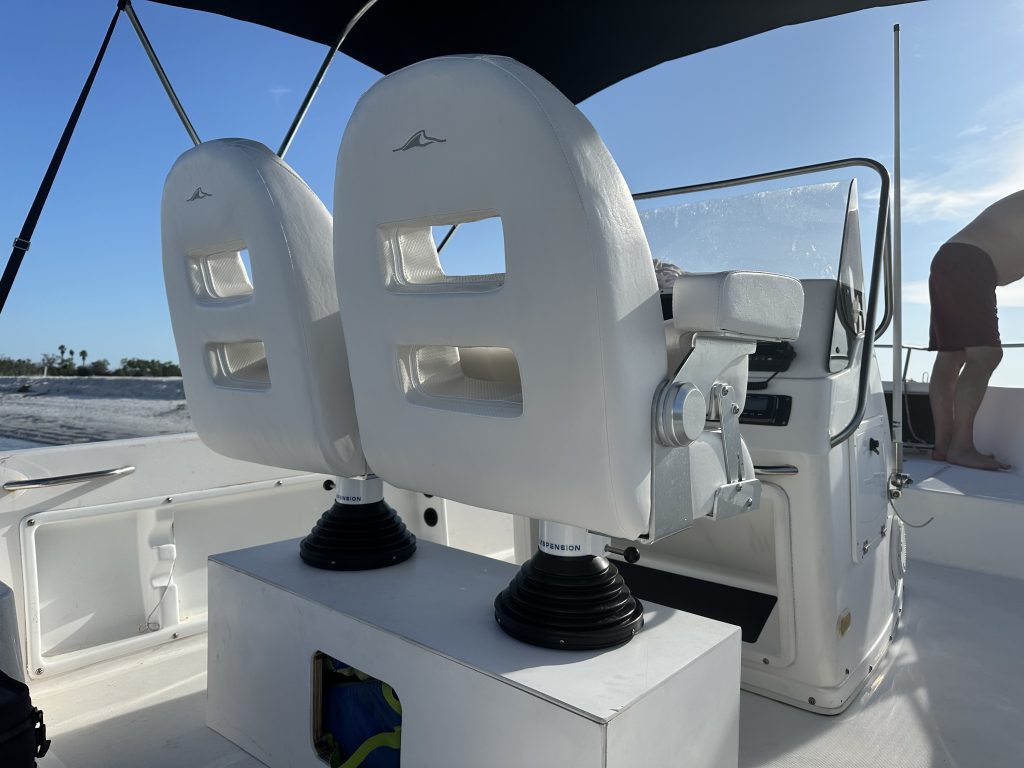
Seaspension uses a stainless-steel spring with hydraulic damping and offers 3.5 inches of suspension travel. Its pedestals are configured for the primary rider when ordered, with different post styles available for common seat arrangements.
WavePro combines an adjustable air spring with a hydraulic shock absorber. Riders can adjust pressure with an air pump to change how the suspension feels. During setup, WavePro recommends about 1 to 1.5 inches of sag, which is the amount the pedestal settles once the rider is seated. That figure is not the pedestal’s total suspension travel, so it should not be compared directly with Seaspension’s 3.5-inch travel specification.
The practical distinction is adjustment. Seaspension is configured around your usual rider and seating layout; WavePro offers user-adjustable air pressure. If several people take turns at the helm, consider how often you want to change the setup.
Seaspension offers pedestals for recreational boats as well as professional marine applications. WavePro has a strong presence among freshwater fishing enthusiasts, including tournament anglers, but its pedestals can also be used in saltwater. Neither choice should be ruled out simply because you fish inland or run offshore.
For saltwater boating, review maintenance requirements and whether the pedestal, deck hardware, and exposed fittings are suited to the environment. WavePro recommends rinsing with fresh water after saltwater use.
That distinction matters for an open-deck installation. Boat type alone does not tell you whether a pedestal is suitable; check corrosion care, the mounting arrangement, and the manufacturer’s maintenance recommendations for the exact model.
Seaspension’s stated optimal occupant range is 140–275 pounds per pedestal. WavePro advertises support for heavier riders, including a claim of handling riders up to 400 pounds or more in its own testing. If you are near the edge of a published weight range, discuss the exact model and adjustment requirements with the manufacturer.
WavePro offers several heights and stationary or movable configurations; some movable versions need an adapter to fit the existing base. Seaspension offers multiple pedestal styles, including low-profile options. Seat height and the shape of the current mount may matter more than the boating category printed on a product page.
WavePro’s movable versions may require an adapter for the existing base, while its stationary versions use a different mounting arrangement. Before ordering either brand, measure from the deck to the bottom of the current seat and note whether the seat must swivel or slide.
Seaspension pedestal configurations start at $825 through its online store. A WavePro stationary pedestal has been listed by U.S. retailers at about $1,000, though the exact model and current price should be checked before ordering. Sliders, adapters, and shipping may affect the final price of either setup.

Seaspension is worth a closer look if you want a U.S.-made pedestal configured for a specific primary rider, with multiple post options for existing marine seating. WavePro may be attractive if adjustable air pressure is important or its stationary and movable mounting choices fit your boat particularly well.
Either way, start with three measurements: the height from deck to seat, the existing mounting pattern, and the clearance the suspension needs to operate. Then look at rider weight, adjustment, and total cost.
Yes. WavePro lists saltwater applications and recommends rinsing after use. Follow its maintenance guidance for exposed installations.
Not necessarily. Seaspension lists 3.5 inches of travel, while WavePro’s commonly cited 1 to 1.5-inch figure is recommended sag used during setup, not its total travel.
WavePro markets its system for a broad range of rider weights, including a manufacturer-reported claim of supporting riders around 400 pounds or more. Seaspension’s published optimal range is 140 to 275 pounds per pedestal. If rider weight is an important deciding factor, ask about the specific model and setup rather than assuming these two figures are equivalent ratings.
Often, but measure the seat and deck mounting points and check whether the selected configuration requires an adapter or slider.
Review the Seaspension Low Profile Spider Post and the full range of suspension pedestals, or call 727-216-9639 for help choosing a configuration for your boat
Choosing a suspension pedestal is about how your boat is set up and how you use it, not just the name on the equipment. Seaspension and WavePro both cushion impacts beneath a marine seat, but they differ in suspension adjustment, post options, and the information you need before ordering.
Seaspension uses a stainless-steel spring with hydraulic damping and offers 3.5 inches of suspension travel. Its pedestals are configured for the primary rider when ordered, with different post styles available for common seat arrangements.
WavePro combines an adjustable air spring with a hydraulic shock absorber. Riders can adjust pressure with an air pump to change how the suspension feels. During setup, WavePro recommends about 1 to 1.5 inches of sag, which is the amount the pedestal settles once the rider is seated. That figure is not the pedestal’s total suspension travel, so it should not be compared directly with Seaspension’s 3.5-inch travel specification.
The practical distinction is adjustment. Seaspension is configured around your usual rider and seating layout; WavePro offers user-adjustable air pressure. If several people take turns at the helm, consider how often you want to change the setup.
Seaspension offers pedestals for recreational boats as well as professional marine applications. WavePro has a strong presence among freshwater fishing enthusiasts, including tournament anglers, but its pedestals can also be used in saltwater. Neither choice should be ruled out simply because you fish inland or run offshore.
For saltwater boating, review maintenance requirements and whether the pedestal, deck hardware, and exposed fittings are suited to the environment. WavePro recommends rinsing with fresh water after saltwater use.
That distinction matters for an open-deck installation. Boat type alone does not tell you whether a pedestal is suitable; check corrosion care, the mounting arrangement, and the manufacturer’s maintenance recommendations for the exact model.
Seaspension’s stated optimal occupant range is 140–275 pounds per pedestal. WavePro advertises support for heavier riders, including a claim of handling riders up to 400 pounds or more in its own testing. If you are near the edge of a published weight range, discuss the exact model and adjustment requirements with the manufacturer.
WavePro offers several heights and stationary or movable configurations; some movable versions need an adapter to fit the existing base. Seaspension offers multiple pedestal styles, including low-profile options. Seat height and the shape of the current mount may matter more than the boating category printed on a product page.
WavePro’s movable versions may require an adapter for the existing base, while its stationary versions use a different mounting arrangement. Before ordering either brand, measure from the deck to the bottom of the current seat and note whether the seat must swivel or slide.
Seaspension pedestal configurations start at $825 through its online store. A WavePro stationary pedestal has been listed by U.S. retailers at about $1,000, though the exact model and current price should be checked before ordering. Sliders, adapters, and shipping may affect the final price of either setup.
Seaspension is worth a closer look if you want a U.S.-made pedestal configured for a specific primary rider, with multiple post options for existing marine seating. WavePro may be attractive if adjustable air pressure is important or its stationary and movable mounting choices fit your boat particularly well.
Either way, start with three measurements: the height from deck to seat, the existing mounting pattern, and the clearance the suspension needs to operate. Then look at rider weight, adjustment, and total cost.
Yes. WavePro lists saltwater applications and recommends rinsing after use. Follow its maintenance guidance for exposed installations.
Not necessarily. Seaspension lists 3.5 inches of travel, while WavePro’s commonly cited 1 to 1.5-inch figure is recommended sag used during setup, not its total travel.
WavePro markets its system for a broad range of rider weights, including a manufacturer-reported claim of supporting riders around 400 pounds or more. Seaspension’s published optimal range is 140 to 275 pounds per pedestal. If rider weight is an important deciding factor, ask about the specific model and setup rather than assuming these two figures are equivalent ratings.
Often, but measure the seat and deck mounting points and check whether the selected configuration requires an adapter or slider.
Review the Seaspension Low Profile Spider Post and the full range of suspension pedestals, or call 727-216-9639 for help choosing a configuration for your boat


