Why Rough Water Takes a Physical Toll on Boaters
Boat seats for rough water are designed to absorb the repeated shocks and impacts that occur when a vessel moves through choppy conditions, protecting the operator and passengers from fatigue, discomfort, and long-term injury.
Quick Answer: What to Look for in Boat Seats for Rough Water
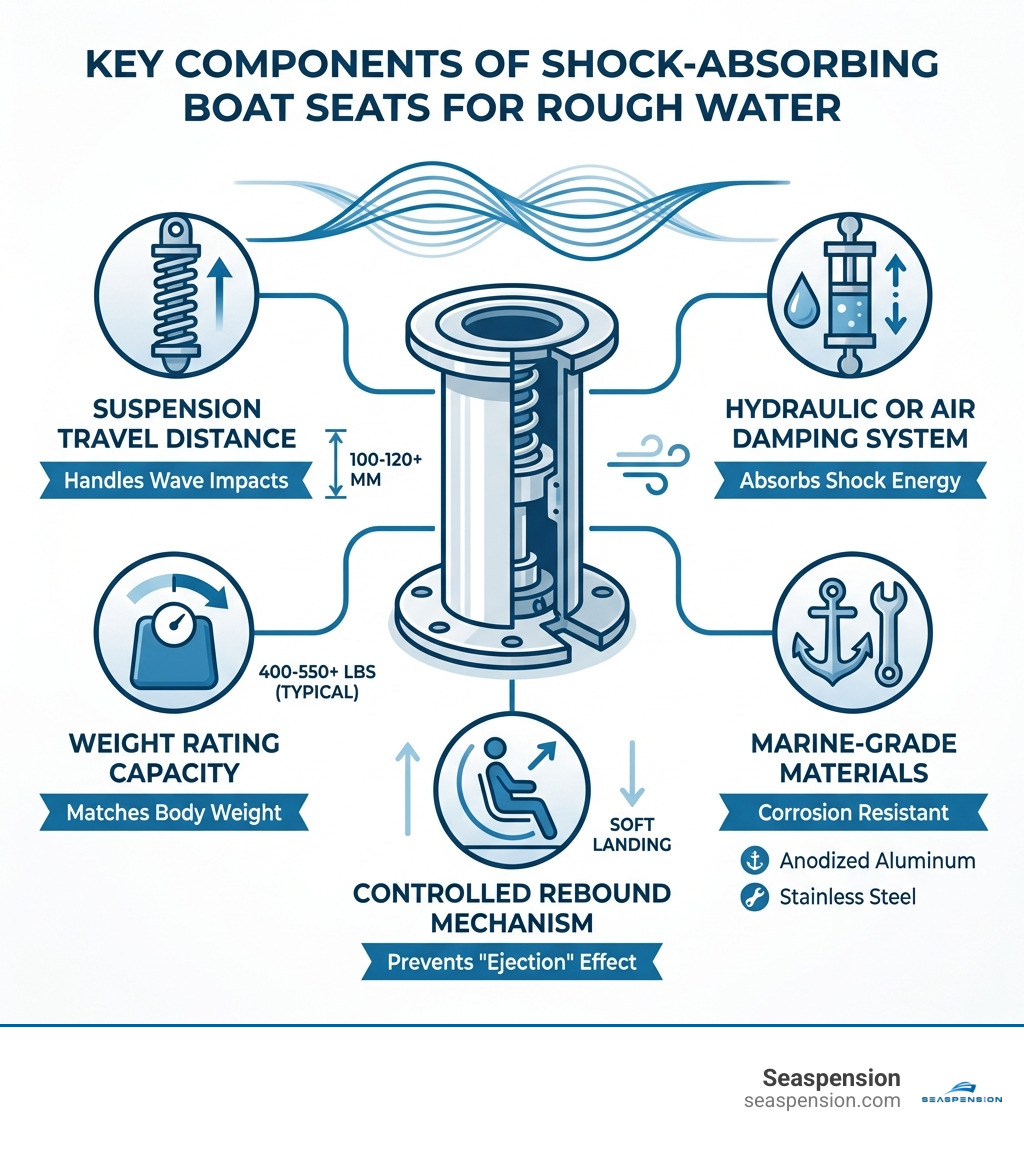
- Shock-absorbing pedestals with hydraulic suspension systems (not just foam cushions)
- Adequate suspension travel (typically 100-120mm or more) to handle wave impacts
- Marine-grade construction using anodized aluminum and stainless steel
- Weight capacity that matches your body weight (up to 400-550 lbs depending on model)
- Controlled rebound to prevent the "ejection" effect when the seat compresses and returns
If you spend time on the water in anything other than calm conditions, you already know the feeling. Every wave sends a jolt through your spine. Your legs brace constantly. Your lower back aches after an hour at the helm. You cut trips short not because you want to, but because your body can't take it anymore.
Standard boat seats — even expensive ones — weren't designed to solve this problem. They're built for looks, storage, or basic comfort in flat water. When conditions get rough, foam cushions compress and bottom out. Rigid pedestals transfer every impact directly into your body. The result is fatigue, soreness, and over time, real injury risk.
The solution isn't more padding. It's true shock mitigation — a system that absorbs impact energy before it reaches your body, then returns smoothly without throwing you upward. That's what proper boat seats for rough water are engineered to do.
I'm Ian Milligan, owner of Seaspension, where we've spent years helping boaters reduce the physical toll of rough water through hydraulic shock-absorbing pedestals. Whether you're running offshore, fishing in choppy conditions, or operating commercially, the right seating system makes a measurable difference in comfort and safety.
The Real Problem with Boating in Rough Water
Boating in rough water isn't just about getting wet or having your coffee spill. It's about constant, jarring impacts that take a significant physical toll on everyone aboard. Imagine hitting hundreds of small potholes, one after another, for hours. That's what your body experiences in choppy seas.
These repetitive impacts lead to:
- Jarring Impacts: Each wave sends a shockwave through the boat's hull, directly into your seat, and then straight up your spine. This isn't just uncomfortable; it's physically damaging.
- Back and Joint Pain: The lower back, knees, and hips are particularly vulnerable to these forces. Many boaters find themselves constantly bracing for the next wave, which further tenses muscles and exacerbates pain.
- Operator Fatigue: Constantly fighting the boat's motion and bracing for impacts drains energy quickly. This fatigue doesn't just make the trip less enjoyable; it can impair judgment and reaction times, posing a safety risk.
- Bracing for Each Wave: This involuntary reaction is a sign that your body is trying to protect itself from excessive force. However, it's an inefficient and exhausting way to manage the conditions.
We understand these challenges firsthand. The constant G-forces experienced when a boat slams into a wave can be intense, far exceeding what the human body is designed to comfortably absorb.
Why a Bumpy Ride Is More Than Just Uncomfortable
The physical consequences of rough water extend far beyond simple discomfort. It's a serious health concern for frequent boaters, leading to potential long-term injuries and chronic issues.
The primary culprit is Whole Body Vibration (WBV) and repetitive impacts. When your boat pounds through waves, your body is subjected to forces that can lead to:
- Spinal Compression: Each hard landing compresses your spinal discs, which can lead to disc degeneration, herniation, and chronic back pain over time.
- Whole Body Vibration (WBV): Even without hard impacts, continuous vibration from the engine and hull can cause fatigue, muscle strain, and contribute to various musculoskeletal disorders.
- G-forces: High-speed impacts can generate significant G-forces, similar to those experienced by pilots or astronauts. These forces can strain muscles, ligaments, and joints throughout the body.
- Muscle Fatigue: The constant effort to maintain balance and brace against impacts leads to rapid muscle fatigue. This can manifest as soreness, stiffness, and reduced physical performance.
- Long-Term Injury Risk: Over years of exposure, boaters are at increased risk for conditions like chronic back pain, sciatica, joint problems, and even, in extreme cases, chronic brain trauma in high-speed vessels, as research into specialized shock mitigation seats has highlighted.
We've explored the hidden force of boating and why your body feels the impact in detail, and the science behind shock absorption is clear: mitigating these forces is crucial for your health and enjoyment on the water. The science behind shock absorption isn't just about comfort; it's about protecting your long-term well-being.
Common Approaches That Don’t Solve the Real Issue
Many boaters, understandably, try to alleviate the pain of rough water with what seems like common sense solutions. However, most of these approaches fall short because they don't address the fundamental problem of impact absorption.

- Standard Pedestal Seats: These are rigid. They transfer every bump, jolt, and impact directly from the boat's deck to your body. While they might look comfortable in the showroom, they offer no protection when the water gets rough.
- Extra Foam or Aftermarket Cushions: Adding more foam or buying thicker cushions might seem like a good idea. Unfortunately, foam compresses and "bottoms out" under significant impact. It might offer a softer initial landing, but it quickly loses its ability to absorb energy from repeated, heavy shocks. It's a temporary fix that doesn't truly mitigate the force.
- Leaning Posts: Popular on center console boats, leaning posts allow you to stand and use your legs to absorb some shock. While this can be effective for short periods or moderate chop, it's incredibly fatiguing over long distances or in truly rough conditions. Your legs can only do so much, and you lose the stability and support of a proper seat.
Why do these solutions fail? Because vibration dampening alone falls short. A cushion might reduce some minor vibrations, but it can't absorb the large, sudden impacts that cause spinal compression and fatigue. These are temporary fixes that don't address the core issue of impact energy transfer. As we've seen, conventional boat seating simply doesn't compare when it comes to true shock mitigation.
What Actually Works: Understanding True Shock Mitigation
True shock mitigation goes beyond mere padding. It involves a sophisticated system designed to absorb and dissipate the energy from wave impacts, preventing it from reaching your body. Think of it like the suspension in your car, but engineered for the unpredictable forces of the marine environment.
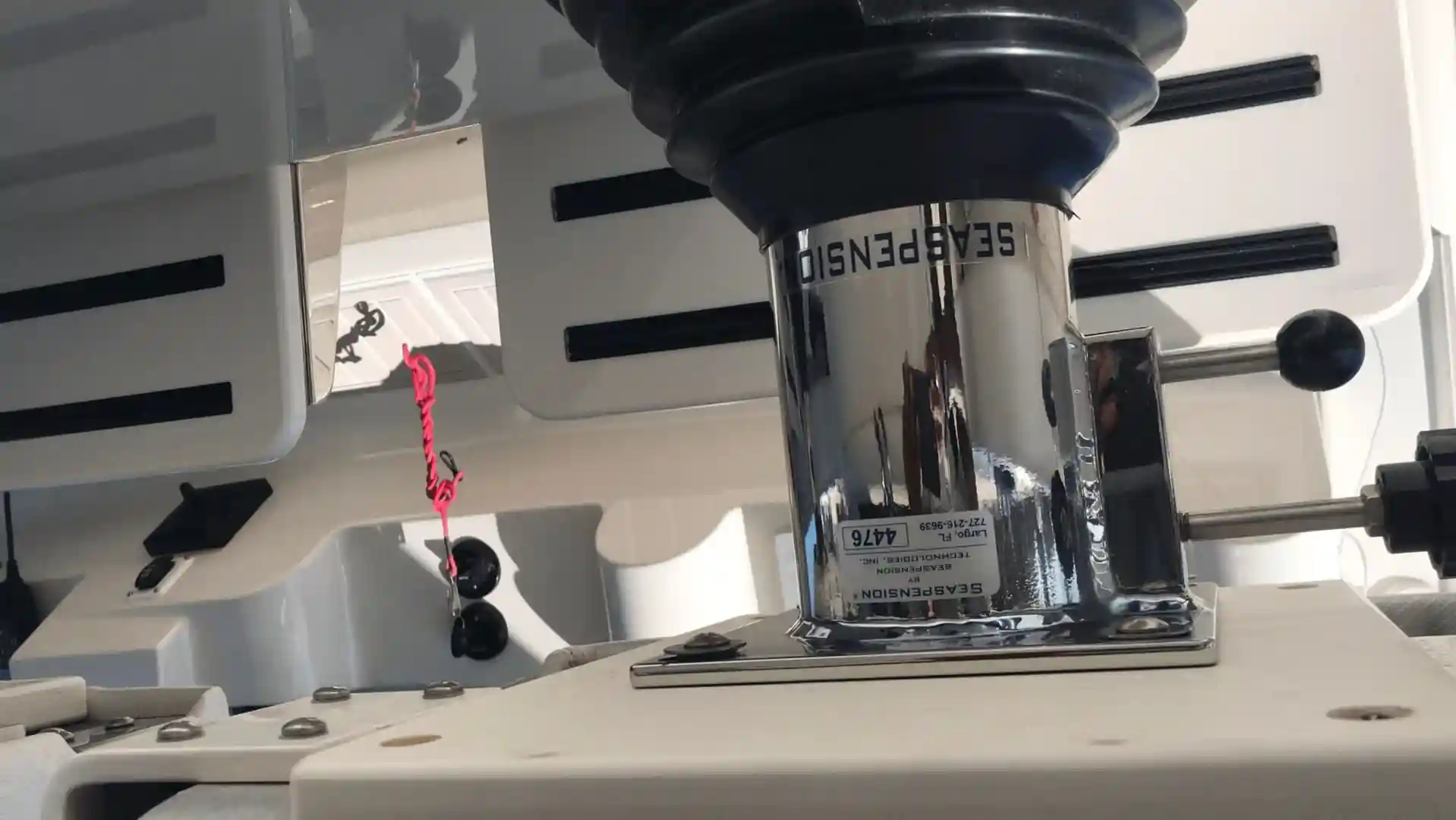
At its core, shock mitigation works through:
- Energy Absorption: When a wave hits the boat, the shock-absorbing system compresses, taking the brunt of the impact. This compression slows down the transfer of force to the occupant.
- Controlled Rebound: Crucially, a good shock mitigation system doesn't just compress; it rebounds in a controlled manner. Without this, you'd experience an "ejection" or "catapult" effect, being thrown upwards just as violently as you were pushed down. Controlled rebound ensures a smooth, gentle return to the original position.
- Preventing the “Ejection” Effect: This is a key differentiator. Poorly designed systems can spring back too quickly, causing a secondary jolt to the body. A proper system uses dampening to manage this return, ensuring a smooth ride.
The goal is to provide a smooth ride on the water, without that back-jarring experience you get with a non-suspension seat. It's about making sure your boat seats save your back, allowing you to enjoy your time on the water without the physical toll. Read more about how boat seats can save your back.
Main Types of Shock-Absorbing Systems for Boats
When considering boat seats for rough water, you'll encounter a few primary types of shock-absorbing systems. The most robust and reliable for the marine environment are hydraulic shock-absorbing pedestals. These use fluid (oil) to dampen motion, much like the shock absorbers in a car, offering excellent control over both compression and rebound for a consistently smooth ride. Our experience shows that hydraulic systems are exceptionally durable and require minimal maintenance.
While other mechanical or pressure-based systems exist, they often introduce complexity and maintenance issues, or lack the controlled rebound needed to prevent a jarring, bouncy ride. It’s important to understand the distinctions between different technologies. What most boaters don't know about hydraulic vs. air suspension for boats can significantly impact their choice and long-term satisfaction.
Pedestals vs. Integrated Seats: Practical Considerations
When upgrading your boat seats for rough water, you generally have two main options: replacing your existing pedestal with a shock-absorbing one, or installing a fully integrated shock-absorbing seat.
-
Shock-Absorbing Pedestals: This is often the most practical and cost-effective solution for many boaters. Pedestals replace your existing rigid seat post, allowing you to keep your current seat top (unless you want to upgrade that too).
- Cost-Effectiveness: Generally less expensive than full integrated seats, as you're only replacing the suspension component.
- Installation Flexibility: Most shock-absorbing pedestals are designed to use industry-standard six-bolt patterns, making installation straightforward for many boats.
- Retrofitting Existing Seats: This is ideal for upgrading older boats or if your existing seat tops are still in good condition. We've seen many boaters elevate their experience by upgrading their new-to-you Parker Boat with a SeaSpension shock-absorbing pedestal.
- Upgrading Older Boats: A shock-absorbing pedestal can breathe new life into an older vessel, making it comfortable for rough water conditions without a complete overhaul.
-
Integrated Shock-Absorbing Seats: These units combine the seat top and the suspension mechanism into a single, cohesive system. They are often found in new boats designed for rough conditions or in high-performance applications.
- OEM Integration: New boat manufacturers often offer integrated suspension seats as an upgrade or standard feature, particularly in models built for offshore or military use.
- Higher Performance (Potentially): Some integrated designs can achieve higher levels of shock mitigation due to a custom-engineered seat-to-suspension interface.
- Higher Cost: Typically the more expensive option due to the combined components and specialized design.
For most recreational and many commercial boaters looking to improve their ride in rough water, a high-quality shock-absorbing pedestal offers an excellent balance of performance, cost, and ease of installation. We believe our best boat seat pedestals offer a superior solution for most applications.
A Buyer's Guide to Boat Seats for Rough Water
Choosing the right boat seats for rough water is an investment in your comfort, safety, and enjoyment. It requires a practical evaluation of several key features to ensure you make an informed decision.
Key Features to Look For in a Shock Mitigation System
When comparing different shock mitigation systems, whether they are full seats or just pedestals, pay close attention to these critical specifications:
- Suspension Travel: This refers to how much vertical movement the seat or pedestal allows to absorb an impact. More travel generally means better absorption for larger waves. Look for systems offering ample travel, such as 114mm or more. This allows the system to compress and decompress effectively, softening the blow.
- Weight Adjustability: The system should be tunable to the occupant's weight. High-quality hydraulic systems often adjust automatically, while other systems may require manual adjustments to accommodate different rider weights (up to 400 lbs or even 550 lbs). This ensures optimal performance regardless of who is in the seat.
- Marine-Grade Materials: The harsh marine environment demands materials that can withstand saltwater, UV exposure, and constant vibration. Look for:
- Anodized Aluminum: Offers high strength-to-weight ratio and excellent corrosion resistance. Many manufacturers use aircraft-grade aluminum with a hard-anodized finish.
- Stainless Steel: Essential for fasteners, springs, and other critical components to prevent rust and ensure longevity.
- No Paint or Powder Coat on Critical Components: Some high-quality systems, particularly those designed for military use, avoid paint or powder coating on moving parts to prevent peeling, chipping, or scratching that could affect performance over time.
- Durability and Construction: Look for robust construction methods like bolted assemblies (which can offer tighter tolerances and easier repairs than welding) and components that are tested, serialized, and certified for traceability. A system built to last means fewer headaches down the line.
- Maintenance Requirements: Consider how much upkeep the system needs. Sealed hydraulic systems typically require very little maintenance beyond occasional inspection, which is a significant advantage over systems that may need periodic checks and adjustments.
These features ensure that your boat seats for rough water aren't just comfortable initially, but remain effective and reliable for years to come.
Matching the System to Your Boat and Activity
The ideal shock-absorbing system depends on your boat type and how you use it. One size doesn't fit all when it comes to boat seats for rough water.
- Offshore Fishing: Anglers often spend long hours in unpredictable conditions. A robust shock-absorbing pedestal is a must for reducing fatigue, allowing you to stay focused on the fish, not your aching back. Whether you're in Alaska, California, or Florida, offshore conditions can be brutal. We recognize why SeaSpension pedestals are a must for anglers.
- Center Consoles and Pilot House Boats: These vessels frequently encounter rough water. The ability to stand and sit comfortably with shock absorption is key. Our systems are designed to integrate seamlessly into these boat types, enhancing comfort and safety.
- High-Speed Vessels: For boats that regularly reach high speeds, especially in choppy water, advanced shock mitigation is critical. Some systems are specifically designed to minimize chronic brain trauma in such conditions. These are often seen in military, commercial, and professional maritime applications.
- Commercial Use: Military, patrol vessels, and crew transfer vessels operating in demanding conditions worldwide rely on heavy-duty suspension seating to protect their crews from severe impacts. These applications demand the highest levels of durability and performance.
- Recreational Cruising: Even if you're not pushing the limits, a smoother ride makes cruising more enjoyable for everyone on board. Reducing fatigue means you can spend more time exploring destinations from Washington to Massachusetts.
We've seen how SeaSpension benefits different boating activities, proving that it's a valuable upgrade for nearly any boater who ventures into rough water.
Determining the Correct Pedestal Height for Your Boat Seats in Rough Water
Getting the correct pedestal height is crucial for both comfort and safety. An improperly sized pedestal can negate many of the benefits of a shock-absorbing system.
Here’s how to determine the right height for your boat seats for rough water:
- Measuring Your Current Setup: Start by measuring the height of your existing seat pedestal from the deck to the bottom of your seat. This gives you a baseline.
- Seated Sightlines: When seated, your eyes should be at a comfortable height to see over the helm, through the windshield, and observe the water ahead without straining. Consider your typical seated posture and how it affects your line of sight.
- Helm Ergonomics: Ensure that when seated, you can comfortably reach the steering wheel, throttles, and other controls. Your arms should be at a natural angle, not stretched or cramped.
- Standing vs. Seated Operation: Many boaters, especially in rough water, alternate between sitting and standing. If you frequently stand, ensure the pedestal height allows you to comfortably transition and provides adequate support when standing or leaning. Some pedestals offer adjustable height, which can be a significant advantage.
- Bolster Seat Compatibility: If your boat has bolster seats that flip up for standing, ensure the shock-absorbing pedestal integrates well with this feature. The pedestal should provide support whether the bolster is up or down.
Some manufacturers provide detailed guides or videos to help you determine the correct height. For example, some suggest watching a video to learn how to determine the height of the shock-absorbing boat seat pedestal to order. We offer a comprehensive guide to choosing the right SeaSpension model for your specific needs.
Installation and Maintenance: What to Expect
Investing in boat seats for rough water is a smart move, but understanding the installation process and long-term maintenance is key to maximizing your investment.
The Installation Process: Is It a DIY Job?
For many boaters, installing a shock-absorbing pedestal can be a manageable DIY project.
- Standard Bolt Patterns: Most quality shock-absorbing pedestals are designed to use industry-standard six-bolt patterns. This means they can often bolt directly into the existing mounting holes on your boat's deck.
- Deck Reinforcement: Before installation, always inspect the area where the pedestal will be mounted. Ensure the deck is solid and adequately reinforced to handle the forces exerted by the suspension system, especially in rough water. If there's any doubt, consider adding backing plates underneath the deck.
- Required Tools: Typically, you'll need basic hand tools such as wrenches, a drill (if new holes are required), and possibly a sealant for the mounting bolts to ensure a watertight installation.
- Professional Installation Options: If you're uncomfortable with the process, or if your boat requires custom modifications, a professional marine technician can handle the installation. This ensures proper mounting and alignment for optimal performance and safety.
We've put together a detailed guide on how to install a SeaSpension shock-absorbing pedestal to help you through the process, whether you're doing it yourself or guiding a professional. For recreational boats, our tips on how to install a boat seat pedestal can be very helpful.
One of the significant advantages of well-engineered shock-absorbing systems, particularly hydraulic ones, is their relatively low maintenance.
- Simple Maintenance: For most systems, routine care involves simply rinsing the pedestal with fresh water after each use, especially after saltwater exposure. This helps prevent salt buildup and corrosion.
- Periodic Inspection: Regularly check all fasteners to ensure they are tight. Inspect visible components for any signs of wear, corrosion, or damage. Address any issues promptly to prevent further problems.
- The Advantage of Sealed Hydraulic Systems: Our hydraulic systems are designed to be largely maintenance-free. Unlike other suspension types, they don't require periodic pressure checks. This means you can spend more time enjoying your boat and less time on upkeep. The sealed nature of the hydraulic unit protects the internal components from the marine environment, contributing to exceptional durability.
- Simplified Operation: With a hydraulic system, you won't need to carry a pump or constantly monitor pressure, simplifying your boating experience.
Proper maintenance, while minimal for our systems, ensures that your boat seats for rough water continue to provide optimal comfort and protection for many seasons to come. Don't forget to include these checks in your winterize your boat checklist.
The Seaspension Advantage: A Practical, Proven Solution
When it comes to boat seats for rough water, we believe in providing a solution that is not just effective, but also practical and built to last. Our approach at Seaspension is rooted in real-world marine experience and a deep understanding of what boaters truly need.
Our unique selling proposition revolves around our patented hydraulic shock absorption system. It provides consistent, reliable performance without the fuss of systems that require pressure adjustments and can be prone to pressure loss. This is why our patented in the USA technology leaves air-dampened seats in the wake.
Here's what sets us apart:
- Military-Grade Durability: Our pedestals are built to withstand the harshest marine conditions. We use robust, marine-grade materials and engineering principles proven in demanding applications. This means solid protection from severe impact, experienced in rough water and higher speeds.
- Automatic and Simple Operation: Our hydraulic system automatically adjusts to varying occupant weights and sea conditions. There's no need for pumps, gauges, or constant tweaking. We're proud to say our independently operating shock-absorbing system offers optimal comfort and safety for boaters, even with a wide range of occupant weights.
- Controlled Rebound: This is a critical aspect of true shock mitigation. Our system is engineered for a controlled return after compression, preventing the jarring "ejection" effect that some other systems can produce. This ensures a consistently smooth ride.
- Made in the USA: We design and manufacture our products right here in the United States, ensuring strict quality control and supporting local craftsmanship. This commitment to quality is why you can trust the durability and performance of our systems.
We understand that you're looking for solutions that work, without the hype. That's why we focus on delivering a product that offers a practical, proven way to reduce impact, protect occupants from jolts, and ultimately improve your boating experience. We invite you to explore why buy Seaspension for your rough water needs.
Stop Enduring the Ride, Start Enjoying It
The days of white-knuckling it through choppy water don't have to be your reality. Investing in proper boat seats for rough water is one of the most impactful upgrades you can make to your vessel. It's about changing your boating experience from a test of endurance to one of pure enjoyment.
- Boating Comfort: Imagine longer trips, more relaxed passengers, and arriving at your destination feeling refreshed, not fatigued. That's the comfort a well-designed shock-absorbing system provides.
- Injury Prevention: More than just comfort, it's about protecting your body. By mitigating the constant impacts, you significantly reduce the risk of back pain, joint issues, and other long-term injuries that can cut your boating career short.
- Extending Your Time on the Water: When the ride is smooth and comfortable, you'll naturally want to spend more time on the water. Whether it's an extra hour of fishing in Homer, Alaska, a longer cruise along the Florida coast, or exploring the waters of Washington, your new seats will make it possible.
- A Smart Investment in Your Boat and Your Body: This isn't just a luxury; it's a critical safety and health upgrade. It's an investment that pays dividends in comfort, longevity, and the sheer pleasure of boating.
We hear countless stories from boaters who tell us the relief they feel after installing SeaSpension on their boat. It's not just about a smoother ride; it's about getting back to doing what you love without the pain.
Ready to make your next trip truly enjoyable? Explore our shock-absorbing boat suspension pedestals and find the difference true shock mitigation can make.
Why Rough Water Takes a Physical Toll on Boaters
Boat seats for rough water are designed to absorb the repeated shocks and impacts that occur when a vessel moves through choppy conditions, protecting the operator and passengers from fatigue, discomfort, and long-term injury.
Quick Answer: What to Look for in Boat Seats for Rough Water
- Shock-absorbing pedestals with hydraulic suspension systems (not just foam cushions)
- Adequate suspension travel (typically 100-120mm or more) to handle wave impacts
- Marine-grade construction using anodized aluminum and stainless steel
- Weight capacity that matches your body weight (up to 400-550 lbs depending on model)
- Controlled rebound to prevent the "ejection" effect when the seat compresses and returns
If you spend time on the water in anything other than calm conditions, you already know the feeling. Every wave sends a jolt through your spine. Your legs brace constantly. Your lower back aches after an hour at the helm. You cut trips short not because you want to, but because your body can't take it anymore.
Standard boat seats — even expensive ones — weren't designed to solve this problem. They're built for looks, storage, or basic comfort in flat water. When conditions get rough, foam cushions compress and bottom out. Rigid pedestals transfer every impact directly into your body. The result is fatigue, soreness, and over time, real injury risk.
The solution isn't more padding. It's true shock mitigation — a system that absorbs impact energy before it reaches your body, then returns smoothly without throwing you upward. That's what proper boat seats for rough water are engineered to do.
I'm Ian Milligan, owner of Seaspension, where we've spent years helping boaters reduce the physical toll of rough water through hydraulic shock-absorbing pedestals. Whether you're running offshore, fishing in choppy conditions, or operating commercially, the right seating system makes a measurable difference in comfort and safety.
The Real Problem with Boating in Rough Water
Boating in rough water isn't just about getting wet or having your coffee spill. It's about constant, jarring impacts that take a significant physical toll on everyone aboard. Imagine hitting hundreds of small potholes, one after another, for hours. That's what your body experiences in choppy seas.
These repetitive impacts lead to:
- Jarring Impacts: Each wave sends a shockwave through the boat's hull, directly into your seat, and then straight up your spine. This isn't just uncomfortable; it's physically damaging.
- Back and Joint Pain: The lower back, knees, and hips are particularly vulnerable to these forces. Many boaters find themselves constantly bracing for the next wave, which further tenses muscles and exacerbates pain.
- Operator Fatigue: Constantly fighting the boat's motion and bracing for impacts drains energy quickly. This fatigue doesn't just make the trip less enjoyable; it can impair judgment and reaction times, posing a safety risk.
- Bracing for Each Wave: This involuntary reaction is a sign that your body is trying to protect itself from excessive force. However, it's an inefficient and exhausting way to manage the conditions.
We understand these challenges firsthand. The constant G-forces experienced when a boat slams into a wave can be intense, far exceeding what the human body is designed to comfortably absorb.
Why a Bumpy Ride Is More Than Just Uncomfortable
The physical consequences of rough water extend far beyond simple discomfort. It's a serious health concern for frequent boaters, leading to potential long-term injuries and chronic issues.
The primary culprit is Whole Body Vibration (WBV) and repetitive impacts. When your boat pounds through waves, your body is subjected to forces that can lead to:
- Spinal Compression: Each hard landing compresses your spinal discs, which can lead to disc degeneration, herniation, and chronic back pain over time.
- Whole Body Vibration (WBV): Even without hard impacts, continuous vibration from the engine and hull can cause fatigue, muscle strain, and contribute to various musculoskeletal disorders.
- G-forces: High-speed impacts can generate significant G-forces, similar to those experienced by pilots or astronauts. These forces can strain muscles, ligaments, and joints throughout the body.
- Muscle Fatigue: The constant effort to maintain balance and brace against impacts leads to rapid muscle fatigue. This can manifest as soreness, stiffness, and reduced physical performance.
- Long-Term Injury Risk: Over years of exposure, boaters are at increased risk for conditions like chronic back pain, sciatica, joint problems, and even, in extreme cases, chronic brain trauma in high-speed vessels, as research into specialized shock mitigation seats has highlighted.
We've explored the hidden force of boating and why your body feels the impact in detail, and the science behind shock absorption is clear: mitigating these forces is crucial for your health and enjoyment on the water. The science behind shock absorption isn't just about comfort; it's about protecting your long-term well-being.
Common Approaches That Don’t Solve the Real Issue
Many boaters, understandably, try to alleviate the pain of rough water with what seems like common sense solutions. However, most of these approaches fall short because they don't address the fundamental problem of impact absorption.
- Standard Pedestal Seats: These are rigid. They transfer every bump, jolt, and impact directly from the boat's deck to your body. While they might look comfortable in the showroom, they offer no protection when the water gets rough.
- Extra Foam or Aftermarket Cushions: Adding more foam or buying thicker cushions might seem like a good idea. Unfortunately, foam compresses and "bottoms out" under significant impact. It might offer a softer initial landing, but it quickly loses its ability to absorb energy from repeated, heavy shocks. It's a temporary fix that doesn't truly mitigate the force.
- Leaning Posts: Popular on center console boats, leaning posts allow you to stand and use your legs to absorb some shock. While this can be effective for short periods or moderate chop, it's incredibly fatiguing over long distances or in truly rough conditions. Your legs can only do so much, and you lose the stability and support of a proper seat.
Why do these solutions fail? Because vibration dampening alone falls short. A cushion might reduce some minor vibrations, but it can't absorb the large, sudden impacts that cause spinal compression and fatigue. These are temporary fixes that don't address the core issue of impact energy transfer. As we've seen, conventional boat seating simply doesn't compare when it comes to true shock mitigation.
What Actually Works: Understanding True Shock Mitigation
True shock mitigation goes beyond mere padding. It involves a sophisticated system designed to absorb and dissipate the energy from wave impacts, preventing it from reaching your body. Think of it like the suspension in your car, but engineered for the unpredictable forces of the marine environment.
At its core, shock mitigation works through:
- Energy Absorption: When a wave hits the boat, the shock-absorbing system compresses, taking the brunt of the impact. This compression slows down the transfer of force to the occupant.
- Controlled Rebound: Crucially, a good shock mitigation system doesn't just compress; it rebounds in a controlled manner. Without this, you'd experience an "ejection" or "catapult" effect, being thrown upwards just as violently as you were pushed down. Controlled rebound ensures a smooth, gentle return to the original position.
- Preventing the “Ejection” Effect: This is a key differentiator. Poorly designed systems can spring back too quickly, causing a secondary jolt to the body. A proper system uses dampening to manage this return, ensuring a smooth ride.
The goal is to provide a smooth ride on the water, without that back-jarring experience you get with a non-suspension seat. It's about making sure your boat seats save your back, allowing you to enjoy your time on the water without the physical toll. Read more about how boat seats can save your back.
Main Types of Shock-Absorbing Systems for Boats
When considering boat seats for rough water, you'll encounter a few primary types of shock-absorbing systems. The most robust and reliable for the marine environment are hydraulic shock-absorbing pedestals. These use fluid (oil) to dampen motion, much like the shock absorbers in a car, offering excellent control over both compression and rebound for a consistently smooth ride. Our experience shows that hydraulic systems are exceptionally durable and require minimal maintenance.
While other mechanical or pressure-based systems exist, they often introduce complexity and maintenance issues, or lack the controlled rebound needed to prevent a jarring, bouncy ride. It’s important to understand the distinctions between different technologies. What most boaters don't know about hydraulic vs. air suspension for boats can significantly impact their choice and long-term satisfaction.
Pedestals vs. Integrated Seats: Practical Considerations
When upgrading your boat seats for rough water, you generally have two main options: replacing your existing pedestal with a shock-absorbing one, or installing a fully integrated shock-absorbing seat.
-
Shock-Absorbing Pedestals: This is often the most practical and cost-effective solution for many boaters. Pedestals replace your existing rigid seat post, allowing you to keep your current seat top (unless you want to upgrade that too).
- Cost-Effectiveness: Generally less expensive than full integrated seats, as you're only replacing the suspension component.
- Installation Flexibility: Most shock-absorbing pedestals are designed to use industry-standard six-bolt patterns, making installation straightforward for many boats.
- Retrofitting Existing Seats: This is ideal for upgrading older boats or if your existing seat tops are still in good condition. We've seen many boaters elevate their experience by upgrading their new-to-you Parker Boat with a SeaSpension shock-absorbing pedestal.
- Upgrading Older Boats: A shock-absorbing pedestal can breathe new life into an older vessel, making it comfortable for rough water conditions without a complete overhaul.
-
Integrated Shock-Absorbing Seats: These units combine the seat top and the suspension mechanism into a single, cohesive system. They are often found in new boats designed for rough conditions or in high-performance applications.
- OEM Integration: New boat manufacturers often offer integrated suspension seats as an upgrade or standard feature, particularly in models built for offshore or military use.
- Higher Performance (Potentially): Some integrated designs can achieve higher levels of shock mitigation due to a custom-engineered seat-to-suspension interface.
- Higher Cost: Typically the more expensive option due to the combined components and specialized design.
For most recreational and many commercial boaters looking to improve their ride in rough water, a high-quality shock-absorbing pedestal offers an excellent balance of performance, cost, and ease of installation. We believe our best boat seat pedestals offer a superior solution for most applications.
A Buyer's Guide to Boat Seats for Rough Water
Choosing the right boat seats for rough water is an investment in your comfort, safety, and enjoyment. It requires a practical evaluation of several key features to ensure you make an informed decision.
Key Features to Look For in a Shock Mitigation System
When comparing different shock mitigation systems, whether they are full seats or just pedestals, pay close attention to these critical specifications:
- Suspension Travel: This refers to how much vertical movement the seat or pedestal allows to absorb an impact. More travel generally means better absorption for larger waves. Look for systems offering ample travel, such as 114mm or more. This allows the system to compress and decompress effectively, softening the blow.
- Weight Adjustability: The system should be tunable to the occupant's weight. High-quality hydraulic systems often adjust automatically, while other systems may require manual adjustments to accommodate different rider weights (up to 400 lbs or even 550 lbs). This ensures optimal performance regardless of who is in the seat.
- Marine-Grade Materials: The harsh marine environment demands materials that can withstand saltwater, UV exposure, and constant vibration. Look for:
- Anodized Aluminum: Offers high strength-to-weight ratio and excellent corrosion resistance. Many manufacturers use aircraft-grade aluminum with a hard-anodized finish.
- Stainless Steel: Essential for fasteners, springs, and other critical components to prevent rust and ensure longevity.
- No Paint or Powder Coat on Critical Components: Some high-quality systems, particularly those designed for military use, avoid paint or powder coating on moving parts to prevent peeling, chipping, or scratching that could affect performance over time.
- Durability and Construction: Look for robust construction methods like bolted assemblies (which can offer tighter tolerances and easier repairs than welding) and components that are tested, serialized, and certified for traceability. A system built to last means fewer headaches down the line.
- Maintenance Requirements: Consider how much upkeep the system needs. Sealed hydraulic systems typically require very little maintenance beyond occasional inspection, which is a significant advantage over systems that may need periodic checks and adjustments.
These features ensure that your boat seats for rough water aren't just comfortable initially, but remain effective and reliable for years to come.
Matching the System to Your Boat and Activity
The ideal shock-absorbing system depends on your boat type and how you use it. One size doesn't fit all when it comes to boat seats for rough water.
- Offshore Fishing: Anglers often spend long hours in unpredictable conditions. A robust shock-absorbing pedestal is a must for reducing fatigue, allowing you to stay focused on the fish, not your aching back. Whether you're in Alaska, California, or Florida, offshore conditions can be brutal. We recognize why SeaSpension pedestals are a must for anglers.
- Center Consoles and Pilot House Boats: These vessels frequently encounter rough water. The ability to stand and sit comfortably with shock absorption is key. Our systems are designed to integrate seamlessly into these boat types, enhancing comfort and safety.
- High-Speed Vessels: For boats that regularly reach high speeds, especially in choppy water, advanced shock mitigation is critical. Some systems are specifically designed to minimize chronic brain trauma in such conditions. These are often seen in military, commercial, and professional maritime applications.
- Commercial Use: Military, patrol vessels, and crew transfer vessels operating in demanding conditions worldwide rely on heavy-duty suspension seating to protect their crews from severe impacts. These applications demand the highest levels of durability and performance.
- Recreational Cruising: Even if you're not pushing the limits, a smoother ride makes cruising more enjoyable for everyone on board. Reducing fatigue means you can spend more time exploring destinations from Washington to Massachusetts.
We've seen how SeaSpension benefits different boating activities, proving that it's a valuable upgrade for nearly any boater who ventures into rough water.
Determining the Correct Pedestal Height for Your Boat Seats in Rough Water
Getting the correct pedestal height is crucial for both comfort and safety. An improperly sized pedestal can negate many of the benefits of a shock-absorbing system.
Here’s how to determine the right height for your boat seats for rough water:
- Measuring Your Current Setup: Start by measuring the height of your existing seat pedestal from the deck to the bottom of your seat. This gives you a baseline.
- Seated Sightlines: When seated, your eyes should be at a comfortable height to see over the helm, through the windshield, and observe the water ahead without straining. Consider your typical seated posture and how it affects your line of sight.
- Helm Ergonomics: Ensure that when seated, you can comfortably reach the steering wheel, throttles, and other controls. Your arms should be at a natural angle, not stretched or cramped.
- Standing vs. Seated Operation: Many boaters, especially in rough water, alternate between sitting and standing. If you frequently stand, ensure the pedestal height allows you to comfortably transition and provides adequate support when standing or leaning. Some pedestals offer adjustable height, which can be a significant advantage.
- Bolster Seat Compatibility: If your boat has bolster seats that flip up for standing, ensure the shock-absorbing pedestal integrates well with this feature. The pedestal should provide support whether the bolster is up or down.
Some manufacturers provide detailed guides or videos to help you determine the correct height. For example, some suggest watching a video to learn how to determine the height of the shock-absorbing boat seat pedestal to order. We offer a comprehensive guide to choosing the right SeaSpension model for your specific needs.
Installation and Maintenance: What to Expect
Investing in boat seats for rough water is a smart move, but understanding the installation process and long-term maintenance is key to maximizing your investment.
The Installation Process: Is It a DIY Job?
For many boaters, installing a shock-absorbing pedestal can be a manageable DIY project.
- Standard Bolt Patterns: Most quality shock-absorbing pedestals are designed to use industry-standard six-bolt patterns. This means they can often bolt directly into the existing mounting holes on your boat's deck.
- Deck Reinforcement: Before installation, always inspect the area where the pedestal will be mounted. Ensure the deck is solid and adequately reinforced to handle the forces exerted by the suspension system, especially in rough water. If there's any doubt, consider adding backing plates underneath the deck.
- Required Tools: Typically, you'll need basic hand tools such as wrenches, a drill (if new holes are required), and possibly a sealant for the mounting bolts to ensure a watertight installation.
- Professional Installation Options: If you're uncomfortable with the process, or if your boat requires custom modifications, a professional marine technician can handle the installation. This ensures proper mounting and alignment for optimal performance and safety.
We've put together a detailed guide on how to install a SeaSpension shock-absorbing pedestal to help you through the process, whether you're doing it yourself or guiding a professional. For recreational boats, our tips on how to install a boat seat pedestal can be very helpful.
One of the significant advantages of well-engineered shock-absorbing systems, particularly hydraulic ones, is their relatively low maintenance.
- Simple Maintenance: For most systems, routine care involves simply rinsing the pedestal with fresh water after each use, especially after saltwater exposure. This helps prevent salt buildup and corrosion.
- Periodic Inspection: Regularly check all fasteners to ensure they are tight. Inspect visible components for any signs of wear, corrosion, or damage. Address any issues promptly to prevent further problems.
- The Advantage of Sealed Hydraulic Systems: Our hydraulic systems are designed to be largely maintenance-free. Unlike other suspension types, they don't require periodic pressure checks. This means you can spend more time enjoying your boat and less time on upkeep. The sealed nature of the hydraulic unit protects the internal components from the marine environment, contributing to exceptional durability.
- Simplified Operation: With a hydraulic system, you won't need to carry a pump or constantly monitor pressure, simplifying your boating experience.
Proper maintenance, while minimal for our systems, ensures that your boat seats for rough water continue to provide optimal comfort and protection for many seasons to come. Don't forget to include these checks in your winterize your boat checklist.
The Seaspension Advantage: A Practical, Proven Solution
When it comes to boat seats for rough water, we believe in providing a solution that is not just effective, but also practical and built to last. Our approach at Seaspension is rooted in real-world marine experience and a deep understanding of what boaters truly need.
Our unique selling proposition revolves around our patented hydraulic shock absorption system. It provides consistent, reliable performance without the fuss of systems that require pressure adjustments and can be prone to pressure loss. This is why our patented in the USA technology leaves air-dampened seats in the wake.
Here's what sets us apart:
- Military-Grade Durability: Our pedestals are built to withstand the harshest marine conditions. We use robust, marine-grade materials and engineering principles proven in demanding applications. This means solid protection from severe impact, experienced in rough water and higher speeds.
- Automatic and Simple Operation: Our hydraulic system automatically adjusts to varying occupant weights and sea conditions. There's no need for pumps, gauges, or constant tweaking. We're proud to say our independently operating shock-absorbing system offers optimal comfort and safety for boaters, even with a wide range of occupant weights.
- Controlled Rebound: This is a critical aspect of true shock mitigation. Our system is engineered for a controlled return after compression, preventing the jarring "ejection" effect that some other systems can produce. This ensures a consistently smooth ride.
- Made in the USA: We design and manufacture our products right here in the United States, ensuring strict quality control and supporting local craftsmanship. This commitment to quality is why you can trust the durability and performance of our systems.
We understand that you're looking for solutions that work, without the hype. That's why we focus on delivering a product that offers a practical, proven way to reduce impact, protect occupants from jolts, and ultimately improve your boating experience. We invite you to explore why buy Seaspension for your rough water needs.
Stop Enduring the Ride, Start Enjoying It
The days of white-knuckling it through choppy water don't have to be your reality. Investing in proper boat seats for rough water is one of the most impactful upgrades you can make to your vessel. It's about changing your boating experience from a test of endurance to one of pure enjoyment.
- Boating Comfort: Imagine longer trips, more relaxed passengers, and arriving at your destination feeling refreshed, not fatigued. That's the comfort a well-designed shock-absorbing system provides.
- Injury Prevention: More than just comfort, it's about protecting your body. By mitigating the constant impacts, you significantly reduce the risk of back pain, joint issues, and other long-term injuries that can cut your boating career short.
- Extending Your Time on the Water: When the ride is smooth and comfortable, you'll naturally want to spend more time on the water. Whether it's an extra hour of fishing in Homer, Alaska, a longer cruise along the Florida coast, or exploring the waters of Washington, your new seats will make it possible.
- A Smart Investment in Your Boat and Your Body: This isn't just a luxury; it's a critical safety and health upgrade. It's an investment that pays dividends in comfort, longevity, and the sheer pleasure of boating.
We hear countless stories from boaters who tell us the relief they feel after installing SeaSpension on their boat. It's not just about a smoother ride; it's about getting back to doing what you love without the pain.
Ready to make your next trip truly enjoyable? Explore our shock-absorbing boat suspension pedestals and find the difference true shock mitigation can make.


