How to install a boat seat correctly determines whether your mounting system stays secure, your deck stays dry, and your body stays protected from wave impact. A poorly installed seat can leak, crack your deck, or fail when you need it most.
Quick Answer: Basic Boat Seat Installation Steps
The actual installation takes about 30 minutes for a basic pedestal mount, but the preparation and attention to detail make the difference between a secure, watertight fit and a future repair project. Many DIY boaters find that getting fasteners aligned perfectly, choosing the right hardware for their deck type, and creating a proper seal requires more than just running screws through holes.
According to industry guidance, the most common mistakes include drilling without checking what's underneath the deck, using inadequate fasteners, and failing to seal penetrations properly—which can lead to water intrusion, cored deck rot, and mounting failure. Bass boat owners working with thin fiberglass platforms face different challenges than pontoon boat owners mounting furniture to aluminum rails, and center console operators installing pedestal systems need to account for both structural support and ergonomic positioning.
But even a flawless installation of a rigid seat mount only solves half the problem. A standard pedestal transfers every wave impact directly into your spine. Over time, that constant shock leads to fatigue, discomfort, and cumulative strain—especially on rough water or during long runs. The foundation you create during installation determines whether your seat stays attached, but the pedestal system you choose determines whether your body pays the price for every wave.
As Ian Milligan, owner of Seaspension, I've worked with hundreds of boat owners and commercial operators who initially focused solely on installation—only to realize that how their seat absorbs impact matters far more than how it's bolted down. Understanding how to install a boat seat properly is essential, but pairing that solid foundation with a shock-absorbing pedestal transforms your time on the water from endurance test to sustainable comfort.
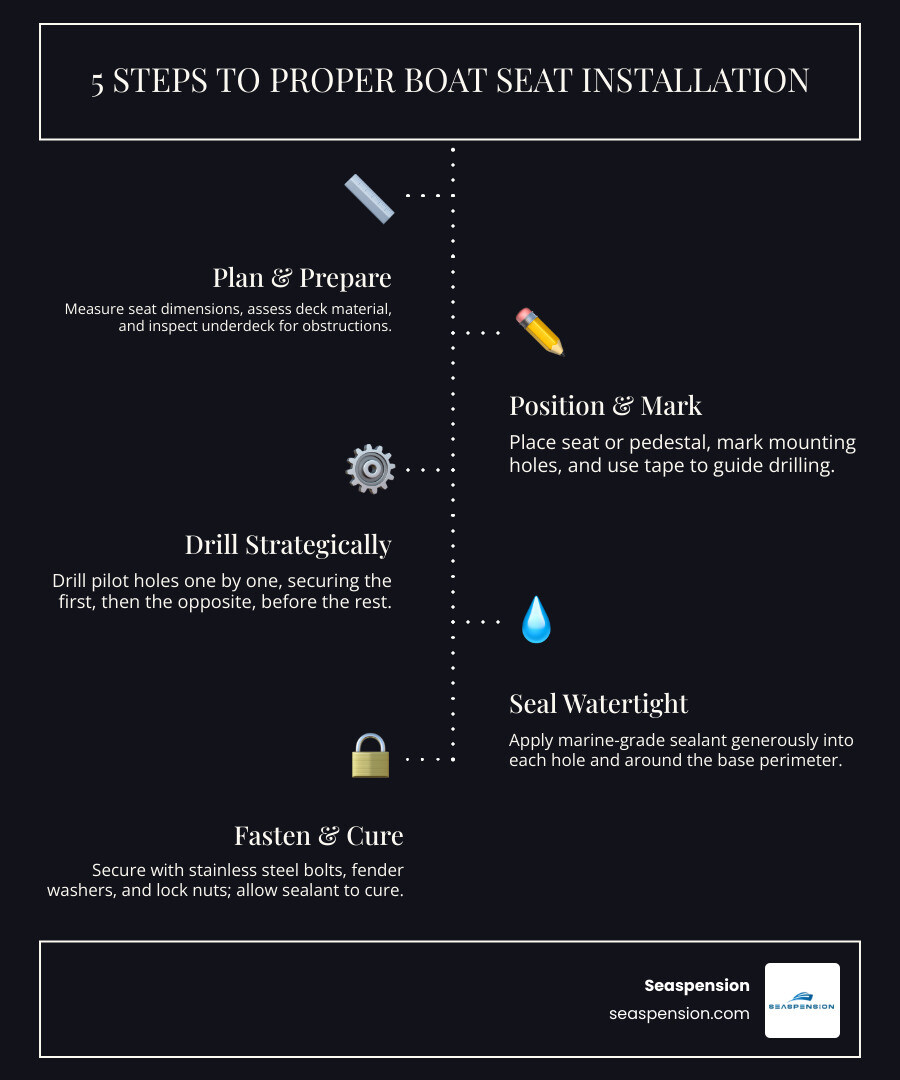
Before we even pick up a drill, careful planning is crucial when we set out to install a boat seat. This phase ensures not just a successful installation but also the longevity of our boat's deck and the safety of its occupants. It's about understanding what we're working with and what we need to get the job done right.
Whether we're replacing an old seat or adding a new one, accurate measurements are our first step. For bench, bucket, or pedestal seats, we need to know the dimensions of the seat itself and the available deck space.
If we're replacing existing seats, we'll want to save the old mounting hardware, as new seats often don't include it. We also consider the existing deck layout and any bracing to ensure compatibility and avoid obstructions.
For pontoon boats, measuring is a bit more involved. We need to measure the distance between the port and starboard rails, the distance between the rear rail and the side gate, and the distance between the front rail and the side gate. It's also important to account for rail support braces when measuring. For corner seats, we might even need to determine the railing's corner radius to ensure a snug fit. Most pontoon boats typically measure 89" to 93" inside the fence railing.
Bass boats usually feature a seating platform that accommodates driver and passenger seats, along with two fishing seats (a rear fold-down or flip-down, and a smaller bike seat for stand-up fishing). Our replacement bass boat seats are designed to fit any style bass boat or fishing boat, making the process of finding compatible seats much easier. Bench seats, for example, can fill platforms up to 68" in width and as small as 46" when combined with bucket seats.
Understanding our boat's decking is paramount. Decks can be made of various materials, such as fiberglass, plywood, or aluminum. Each material has its own characteristics for fastener retention and structural integrity. Plywood, for instance, generally offers better screw retention than fiberglass.
We always check for the solidity and any flex in the deck where the seat will be mounted. It's especially important to determine if the deck is cored (has a lightweight material sandwiched between two layers). If water gets into a cored deck, it can lead to rot and structural damage, so proper sealing is non-negotiable.
Before drilling, we must double-check the area underneath our mounting spot. We're looking to make sure we won’t be drilling into anything we could damage, like wires, fuel tanks, or plumbing. If we don't have direct under-deck access, using an inspection port can help us assess the situation and plan for bolts with backing washers and nuts. In some cases, like reinforcing a bench seat for a new pedestal base, custom modifications like adding plywood and vinyl wrap might be necessary, especially if we're accommodating heavier occupants.
Having the correct tools and hardware on hand makes all the difference for a secure and long-lasting installation.
Our essential tools typically include:
When it comes to hardware, we always opt for stainless steel to resist corrosion in the marine environment. The choice between bolts and screws is critical. Bolts, especially with substantial backing washers and nuts, offer superior security and allow for tightening over time. Screws, conversely, can gradually work loose and weaken the decking, particularly under stress from boat pounding.
We emphasize the importance of using wide 'fender' washers to prevent the deck from cracking, especially with fiberglass. Nylon lock nuts are also vital to keep the seat from wiggling loose over time. Finally, selecting a high-quality marine-grade adhesive/sealant is non-negotiable for creating a watertight seal and preventing water intrusion into the deck.
Once we've planned carefully and gathered our tools, we're ready to proceed with the actual installation. Following these steps carefully will ensure a secure and watertight boat seat installation.
First, we begin by removing any old seats and hardware. Then, we thoroughly clean the deck area where the new seat will be installed. This ensures proper adhesion for any sealants and a clean work surface.
Next, we carefully position the new seat or seat base in its desired location. We consider ergonomics, reach to steering controls, and standing positions. Once satisfied with the placement, we use a pencil or a fine-tipped marker to mark the exact locations for our mounting holes. For added precision and to prevent the drill bit from slipping, we often use painter’s tape to define the installation area and mark our drill points.
For basic bench or bucket seats, the process is straightforward. Many replacement bass boat seats come with pre-installed plastic bars with mounting blocks on the seat backs. We position the backrest against the rear wall of the seating platform and drill small pilot holes into the boat's back wall. This prevents damage to the fiberglass. Then, we drive #14 x 2” stainless screws into each plastic mounting bar to secure the backrest. Assuming a 3/4” thick back wall, these 2” screws will protrude approximately 1/4” through.
Next, we line up the seat cushion with the installed backrest. Many seat cushions come with hinges that allow us to adjust the seat forward or back depending on the platform's depth. We then screw the hinge and a matching vinyl piece to the platform to attach the seat cushion. We use the included hardware or appropriate marine-grade fasteners, ensuring they are stainless steel. When installing fishing seats, metal t-nuts are inserted into the plastic frames, so we start bolts by hand before using a screwdriver to prevent misthreading.
Installing a boat seat with a pedestal base requires a bit more finesse to ensure perfect alignment and stability. First, we position the base for optimal ergonomics, considering the driver's or passenger's comfort and access to controls.
The key to preventing crooked screws and uneven stress is our drilling technique. We drill a single pilot hole through one of the base's mounting holes. Without caulking, we run a bolt or screw into this first hole, securing the base loosely. Then, we drill a second hole on the opposite side of the base and insert another fastener. With these two fasteners holding the base firmly in place, we can confidently drill all the remaining holes. This method prevents the base from shifting and ensures all holes are perfectly aligned.
This step is critical for preventing water intrusion and potential damage to our boat's deck, especially if it’s cored. Once all the holes are drilled and the base has been dry-fitted, we remove the base and thoroughly clean off all shavings and dust from the deck surface and inside the holes.
Next, we apply a generous amount of marine caulk or adhesive/sealant into each screw hole. It's good practice to also apply a bead of sealant around the perimeter of the base's footprint. This creates a complete barrier against water.
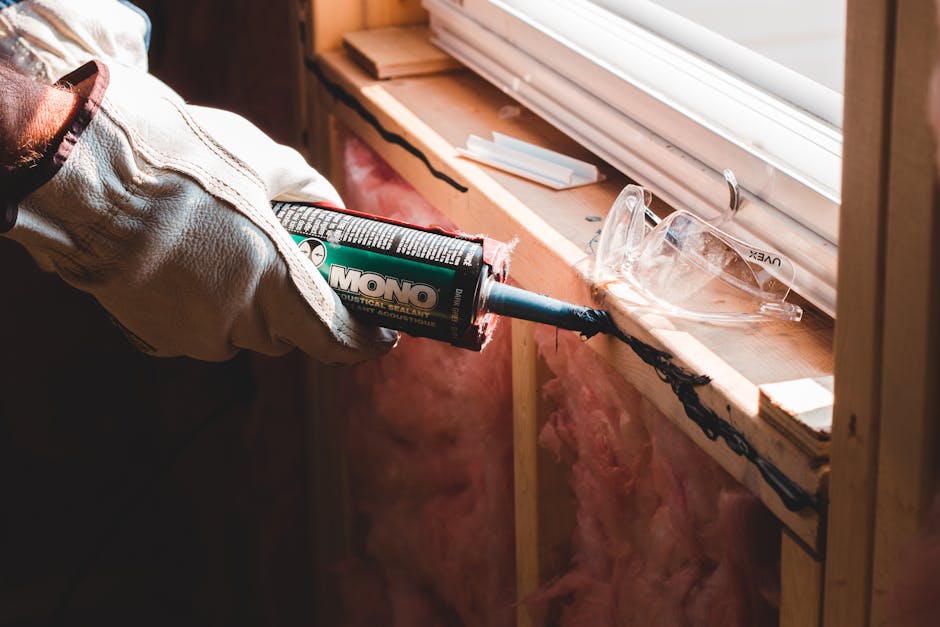
We then carefully re-install the seat base, aligning the holes, and drive in all the fasteners (bolts with fender washers and lock nuts are preferred). We tighten the hardware securely, but we're careful not to over-torque, which could damage the deck or the fasteners. After installation, we always wait for the caulk or adhesive/sealant to completely cure as per the manufacturer's instructions before using our boat. This ensures a durable and watertight seal.
Beyond the basic steps, there are several advanced considerations that lift a good installation to a superior one. These factors ensure long-term durability, compliance with safety standards, and improved comfort on the water.
When we talk about how to install a boat seat, we often focus on the physical attachment, but the type of pedestal we choose significantly impacts the experience. We have various types of pedestals, including fixed posts, which offer a static height, and swivel pedestals, which allow for rotation.
Safety standards are paramount in marine seating. The American Boat & Yacht Council (ABYC) has categorized boat seat pedestals since 1996 to ensure safety. Class A pedestals (AD for Driver, AP for Passenger) are designed for use at any speed and must meet specific torque and static load resistance requirements (e.g., sustaining a 300 lbs static load for 3 minutes). Class B pedestals are for use at speeds of 5 mph or less. These standards ensure our seats are secure under various operating conditions.
Beyond just holding the seat, the role of shock absorption in a pedestal cannot be overstated. A quality shock-absorbing pedestal actively reduces boater fatigue and prevents injury by mitigating the constant impacts from waves. This is especially true for us who regularly experience rough water.
The specifics of how to install a boat seat can vary considerably depending on the type of boat.
Even seasoned boaters can make mistakes during seat installation. Here are some common pitfalls we strive to avoid:
By being mindful of these considerations, we ensure a safe, secure, and durable seat installation that will serve us well for many years on the water.
We've covered the crucial steps for how to install a boat seat securely and watertight. But a flawless installation of a rigid seat mount is only the beginning. For those of us who spend significant time on the water, especially in less-than-ideal conditions, the real difference in comfort and safety comes from the pedestal itself.
Imagine a long day on the water, cruising through choppy seas or enduring the constant pounding of waves. Every jolt, every impact, is transferred directly through a static seat mount to our bodies. This constant vibration and shock take a physical toll.
Operator fatigue is a significant concern on long runs. When our bodies are constantly absorbing impacts, our muscles tense up, leading to discomfort, back pain, and even cumulative strain over time. This isn't just about discomfort; it can affect our ability to react quickly and safely. A rigid mount acts like a direct conduit, sending every wave impact straight into the occupant’s spine and joints. It's an endurance test, not a comfortable ride.
This is where a true shock-absorbing pedestal transforms our boating experience. Instead of simply holding a seat in place, a suspension system actively dissipates impact forces before they reach us. It turns a harsh ride into a smooth glide, even in challenging conditions.
There's a significant difference between a simple spring mechanism and a sophisticated hydraulic damper. A basic spring might offer some cushioning, but it often rebounds, creating a "pogo stick" effect. A hydraulic damper, however, controls both compression and rebound, effectively absorbing the energy of an impact and preventing it from being transferred to the occupant.
Our Seaspension pedestals feature an independently operating shock-absorbing system. This unique design ensures optimal comfort and safety for boaters, even with varying occupant weights. It's engineered to reduce impact and protect us from jolts, allowing for a safer, more comfortable ride in rough conditions. This focus on shock mitigation means we can enjoy our time on the water longer, with less fatigue and greater control. We've seen the relief boaters feel after upgrading to a Seaspension system.
A successful boat seat installation depends on careful preparation, the right hardware, and a meticulous sealing process. This ensures your seat is safe and your deck remains structurally sound. However, the installation is only the foundation. For real comfort and to reduce the physical impact of rough water, the pedestal you choose makes the biggest difference. A system designed to absorb shock transforms a simple seat into a component that actively improves your experience on the water.
Ready to install a system that provides comfort and safety in real marine conditions? Learn more with our detailed guide: How to Install a Seaspension Shock-Absorbing Pedestal.
How to install a boat seat correctly determines whether your mounting system stays secure, your deck stays dry, and your body stays protected from wave impact. A poorly installed seat can leak, crack your deck, or fail when you need it most.
Quick Answer: Basic Boat Seat Installation Steps
The actual installation takes about 30 minutes for a basic pedestal mount, but the preparation and attention to detail make the difference between a secure, watertight fit and a future repair project. Many DIY boaters find that getting fasteners aligned perfectly, choosing the right hardware for their deck type, and creating a proper seal requires more than just running screws through holes.
According to industry guidance, the most common mistakes include drilling without checking what's underneath the deck, using inadequate fasteners, and failing to seal penetrations properly—which can lead to water intrusion, cored deck rot, and mounting failure. Bass boat owners working with thin fiberglass platforms face different challenges than pontoon boat owners mounting furniture to aluminum rails, and center console operators installing pedestal systems need to account for both structural support and ergonomic positioning.
But even a flawless installation of a rigid seat mount only solves half the problem. A standard pedestal transfers every wave impact directly into your spine. Over time, that constant shock leads to fatigue, discomfort, and cumulative strain—especially on rough water or during long runs. The foundation you create during installation determines whether your seat stays attached, but the pedestal system you choose determines whether your body pays the price for every wave.
As Ian Milligan, owner of Seaspension, I've worked with hundreds of boat owners and commercial operators who initially focused solely on installation—only to realize that how their seat absorbs impact matters far more than how it's bolted down. Understanding how to install a boat seat properly is essential, but pairing that solid foundation with a shock-absorbing pedestal transforms your time on the water from endurance test to sustainable comfort.
Before we even pick up a drill, careful planning is crucial when we set out to install a boat seat. This phase ensures not just a successful installation but also the longevity of our boat's deck and the safety of its occupants. It's about understanding what we're working with and what we need to get the job done right.
Whether we're replacing an old seat or adding a new one, accurate measurements are our first step. For bench, bucket, or pedestal seats, we need to know the dimensions of the seat itself and the available deck space.
If we're replacing existing seats, we'll want to save the old mounting hardware, as new seats often don't include it. We also consider the existing deck layout and any bracing to ensure compatibility and avoid obstructions.
For pontoon boats, measuring is a bit more involved. We need to measure the distance between the port and starboard rails, the distance between the rear rail and the side gate, and the distance between the front rail and the side gate. It's also important to account for rail support braces when measuring. For corner seats, we might even need to determine the railing's corner radius to ensure a snug fit. Most pontoon boats typically measure 89" to 93" inside the fence railing.
Bass boats usually feature a seating platform that accommodates driver and passenger seats, along with two fishing seats (a rear fold-down or flip-down, and a smaller bike seat for stand-up fishing). Our replacement bass boat seats are designed to fit any style bass boat or fishing boat, making the process of finding compatible seats much easier. Bench seats, for example, can fill platforms up to 68" in width and as small as 46" when combined with bucket seats.
Understanding our boat's decking is paramount. Decks can be made of various materials, such as fiberglass, plywood, or aluminum. Each material has its own characteristics for fastener retention and structural integrity. Plywood, for instance, generally offers better screw retention than fiberglass.
We always check for the solidity and any flex in the deck where the seat will be mounted. It's especially important to determine if the deck is cored (has a lightweight material sandwiched between two layers). If water gets into a cored deck, it can lead to rot and structural damage, so proper sealing is non-negotiable.
Before drilling, we must double-check the area underneath our mounting spot. We're looking to make sure we won’t be drilling into anything we could damage, like wires, fuel tanks, or plumbing. If we don't have direct under-deck access, using an inspection port can help us assess the situation and plan for bolts with backing washers and nuts. In some cases, like reinforcing a bench seat for a new pedestal base, custom modifications like adding plywood and vinyl wrap might be necessary, especially if we're accommodating heavier occupants.
Having the correct tools and hardware on hand makes all the difference for a secure and long-lasting installation.
Our essential tools typically include:
When it comes to hardware, we always opt for stainless steel to resist corrosion in the marine environment. The choice between bolts and screws is critical. Bolts, especially with substantial backing washers and nuts, offer superior security and allow for tightening over time. Screws, conversely, can gradually work loose and weaken the decking, particularly under stress from boat pounding.
We emphasize the importance of using wide 'fender' washers to prevent the deck from cracking, especially with fiberglass. Nylon lock nuts are also vital to keep the seat from wiggling loose over time. Finally, selecting a high-quality marine-grade adhesive/sealant is non-negotiable for creating a watertight seal and preventing water intrusion into the deck.
Once we've planned carefully and gathered our tools, we're ready to proceed with the actual installation. Following these steps carefully will ensure a secure and watertight boat seat installation.
First, we begin by removing any old seats and hardware. Then, we thoroughly clean the deck area where the new seat will be installed. This ensures proper adhesion for any sealants and a clean work surface.
Next, we carefully position the new seat or seat base in its desired location. We consider ergonomics, reach to steering controls, and standing positions. Once satisfied with the placement, we use a pencil or a fine-tipped marker to mark the exact locations for our mounting holes. For added precision and to prevent the drill bit from slipping, we often use painter’s tape to define the installation area and mark our drill points.
For basic bench or bucket seats, the process is straightforward. Many replacement bass boat seats come with pre-installed plastic bars with mounting blocks on the seat backs. We position the backrest against the rear wall of the seating platform and drill small pilot holes into the boat's back wall. This prevents damage to the fiberglass. Then, we drive #14 x 2” stainless screws into each plastic mounting bar to secure the backrest. Assuming a 3/4” thick back wall, these 2” screws will protrude approximately 1/4” through.
Next, we line up the seat cushion with the installed backrest. Many seat cushions come with hinges that allow us to adjust the seat forward or back depending on the platform's depth. We then screw the hinge and a matching vinyl piece to the platform to attach the seat cushion. We use the included hardware or appropriate marine-grade fasteners, ensuring they are stainless steel. When installing fishing seats, metal t-nuts are inserted into the plastic frames, so we start bolts by hand before using a screwdriver to prevent misthreading.
Installing a boat seat with a pedestal base requires a bit more finesse to ensure perfect alignment and stability. First, we position the base for optimal ergonomics, considering the driver's or passenger's comfort and access to controls.
The key to preventing crooked screws and uneven stress is our drilling technique. We drill a single pilot hole through one of the base's mounting holes. Without caulking, we run a bolt or screw into this first hole, securing the base loosely. Then, we drill a second hole on the opposite side of the base and insert another fastener. With these two fasteners holding the base firmly in place, we can confidently drill all the remaining holes. This method prevents the base from shifting and ensures all holes are perfectly aligned.
This step is critical for preventing water intrusion and potential damage to our boat's deck, especially if it’s cored. Once all the holes are drilled and the base has been dry-fitted, we remove the base and thoroughly clean off all shavings and dust from the deck surface and inside the holes.
Next, we apply a generous amount of marine caulk or adhesive/sealant into each screw hole. It's good practice to also apply a bead of sealant around the perimeter of the base's footprint. This creates a complete barrier against water.
We then carefully re-install the seat base, aligning the holes, and drive in all the fasteners (bolts with fender washers and lock nuts are preferred). We tighten the hardware securely, but we're careful not to over-torque, which could damage the deck or the fasteners. After installation, we always wait for the caulk or adhesive/sealant to completely cure as per the manufacturer's instructions before using our boat. This ensures a durable and watertight seal.
Beyond the basic steps, there are several advanced considerations that lift a good installation to a superior one. These factors ensure long-term durability, compliance with safety standards, and improved comfort on the water.
When we talk about how to install a boat seat, we often focus on the physical attachment, but the type of pedestal we choose significantly impacts the experience. We have various types of pedestals, including fixed posts, which offer a static height, and swivel pedestals, which allow for rotation.
Safety standards are paramount in marine seating. The American Boat & Yacht Council (ABYC) has categorized boat seat pedestals since 1996 to ensure safety. Class A pedestals (AD for Driver, AP for Passenger) are designed for use at any speed and must meet specific torque and static load resistance requirements (e.g., sustaining a 300 lbs static load for 3 minutes). Class B pedestals are for use at speeds of 5 mph or less. These standards ensure our seats are secure under various operating conditions.
Beyond just holding the seat, the role of shock absorption in a pedestal cannot be overstated. A quality shock-absorbing pedestal actively reduces boater fatigue and prevents injury by mitigating the constant impacts from waves. This is especially true for us who regularly experience rough water.
The specifics of how to install a boat seat can vary considerably depending on the type of boat.
Even seasoned boaters can make mistakes during seat installation. Here are some common pitfalls we strive to avoid:
By being mindful of these considerations, we ensure a safe, secure, and durable seat installation that will serve us well for many years on the water.
We've covered the crucial steps for how to install a boat seat securely and watertight. But a flawless installation of a rigid seat mount is only the beginning. For those of us who spend significant time on the water, especially in less-than-ideal conditions, the real difference in comfort and safety comes from the pedestal itself.
Imagine a long day on the water, cruising through choppy seas or enduring the constant pounding of waves. Every jolt, every impact, is transferred directly through a static seat mount to our bodies. This constant vibration and shock take a physical toll.
Operator fatigue is a significant concern on long runs. When our bodies are constantly absorbing impacts, our muscles tense up, leading to discomfort, back pain, and even cumulative strain over time. This isn't just about discomfort; it can affect our ability to react quickly and safely. A rigid mount acts like a direct conduit, sending every wave impact straight into the occupant’s spine and joints. It's an endurance test, not a comfortable ride.
This is where a true shock-absorbing pedestal transforms our boating experience. Instead of simply holding a seat in place, a suspension system actively dissipates impact forces before they reach us. It turns a harsh ride into a smooth glide, even in challenging conditions.
There's a significant difference between a simple spring mechanism and a sophisticated hydraulic damper. A basic spring might offer some cushioning, but it often rebounds, creating a "pogo stick" effect. A hydraulic damper, however, controls both compression and rebound, effectively absorbing the energy of an impact and preventing it from being transferred to the occupant.
Our Seaspension pedestals feature an independently operating shock-absorbing system. This unique design ensures optimal comfort and safety for boaters, even with varying occupant weights. It's engineered to reduce impact and protect us from jolts, allowing for a safer, more comfortable ride in rough conditions. This focus on shock mitigation means we can enjoy our time on the water longer, with less fatigue and greater control. We've seen the relief boaters feel after upgrading to a Seaspension system.
A successful boat seat installation depends on careful preparation, the right hardware, and a meticulous sealing process. This ensures your seat is safe and your deck remains structurally sound. However, the installation is only the foundation. For real comfort and to reduce the physical impact of rough water, the pedestal you choose makes the biggest difference. A system designed to absorb shock transforms a simple seat into a component that actively improves your experience on the water.
Ready to install a system that provides comfort and safety in real marine conditions? Learn more with our detailed guide: How to Install a Seaspension Shock-Absorbing Pedestal.


